









Instagram Stories are still one of the most attention-grabbing placements on the app, because they take over the whole screen. And as of late 2025, Meta said Instagram had reached 3 billion monthly active users, so the stakes (and competition) are only getting higher.
The good news is the core Story size has not changed. What has changed is how often your Story creative gets reused across placements (Stories, Reels, ads), and how easily important text gets covered by UI elements if you ignore safe zones.
TL;DR: Instagram Story dimensions in 2026 are 1080 × 1920 px (9:16). Keep text, logos, and CTAs away from the top and bottom edges so Instagram’s UI doesn’t cover them. If you run Story ads, reserve extra space at the bottom for the call-to-action overlay and buttons.
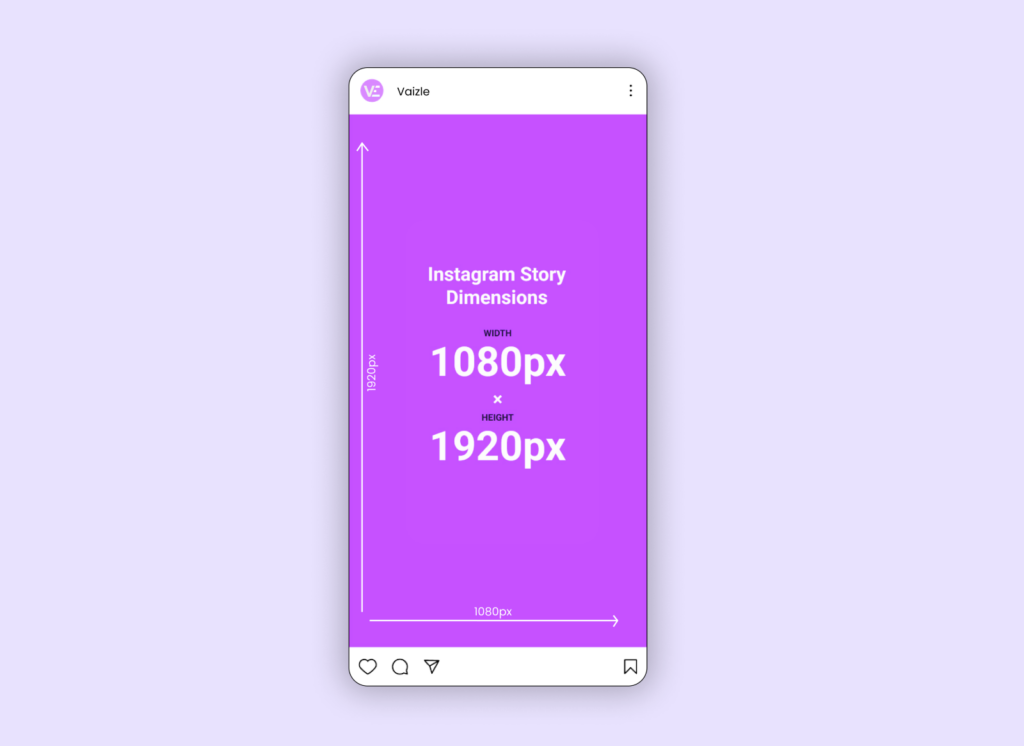
Instagram Story sizes are set to make sure they look good on all devices. In 2026, the best Insta Story size is 1080 pixels wide by 1920 pixels tall. This means that the optimal Instagram Story ratio is 9:16.
To put things in context – think of a rectangle split into 25 equal parts. There are 9 parts for the width and 16 parts for the height. This setup makes sure your content covers the entire screen of most smartphones. It gives your viewers a better and more enjoyable experience.
Instagram Stories provide a fun, interactive way to connect with your audience and effectively boost social media engagement. To make the most of this, you need to create content that stands out and uses the screen effectively to capture attention.
When your story fills the screen, it grabs attention and makes the experience more engaging. If your content is too small or poorly cropped, viewers might focus on empty space, making the story less enjoyable.
Using the right Instagram Story dimensions ensures your visuals look their best, helping you capture attention and encourage interaction with your content.
The current recommended Instagram Stories size is 1080 x 1920 pixels, which maintains the 9:16 aspect ratio. While these dimensions are unlikely to change soon, app updates may slightly alter the layout of elements like stickers, GIFs, and the profile picture.
These small changes usually happen to make the user experience better or to bring in new features. For example, Instagram might move the position of interactive stickers slightly to fit a new interactive tool.
So, even though the main Instagram Story aspect ratio stays the same, you still need to keep up with any small changes to the layout. You can check this information through the official Instagram blog.
Making content that meets the recommended Instagram Story ratio can get challenging at times, but it’s generally quite easy. Most smartphones let you take videos and pictures in the 9:16 aspect ratio.
Moreover, you can also use Instagram editing tools to change the aspect ratio of any content you already have. Keeping your content in these dimensions helps your audience enjoy watching it and makes your visuals more attractive.
Adapting your visual content for Instagram Stories doesn’t mean losing creativity. Instead, it can spark new ideas within a limited space. Here are some easy tips to help you adapt your visuals:
By using these graphic design tips and putting them into your social media strategy, you can create amazing Instagram Stories that people will remember.
👉 You might also want to read: How to Create High-Quality Content for Instagram?
Another way to ensure your content fits the recommended IG Story px size is by using templates.
Instagram story templates are a good way to make sure your content is the right size and looks good. You can easily find free and paid ready-to-use templates on multiple websites.
Here’s how to use IG Story templates effectively:
You can also create your own templates but using pre-made templates takes away the worry of resizing. This way, your visuals are always the correct Instagram Story dimensions and ready to be published.
Most people search “Instagram Story dimensions” because they want their content to look crisp. But marketers usually need one more layer: Story ad specs can be stricter than organic Stories.
One practical rule: Create in 9:16, export high-quality once, and avoid re-saving the file multiple times. Re-exports usually cause the “why is this blurry?” problem faster than people expect.
“Safe zone” means the part of your Story where text and key elements stay readable, even after Instagram adds UI overlays (profile icon, reply bar, stickers, CTA buttons).
A simple approach is to keep important content inside the central safe area (not hugging the top or bottom). Hootsuite summarizes this as a safe area of 1080 × 1610 px for Stories.
If you run Story ads, the bottom overlay is usually bigger because of the call-to-action. A commonly cited guideline is:
If you follow only one rule: put the hook and the CTA in the middle, and treat the top and bottom edges as “no important text” zones.
Now that you know all about Instagram Story dimensions & resolutions, let’s jump to actual content and design trends.
Following the latest design trends can help you maintain your brand identity and stand out amongst Instagram competitors.
Look at what is popular, like color schemes, font pairings, or animation styles. Try different Instagram trends and see what your followers respond to. Keep in mind that these trends change quickly. Focus on adding them in a way that matches your current style without losing your brand’s message or identity.
👉 READ MORE: Discover fresh Instagram Story ideas to elevate your brand engagement. Explore 22 creative concepts you can use today!
One of the latest popular trends is using soft colors and simple designs. This creates a feeling of style and subtle beauty.
Another trend is adding hand-drawn parts to your posts. This gives your content a personal touch and feels real rather than something created with AI Image Generators. Many audiences like this because they want to connect with brands that feel authentic.
That said, you don’t need to use every trend. Make sure to only pick social media trends that fit your brand’s identity and connect with your target audience.
Interactive stickers (like polls, quizzes, or questions) get people to join in. They also give you useful information about your audience and help build a community.
Animations, whether they are smooth transitions or fun GIFs, add energy to your Instagram Stories. This draws people’s attention and makes the overall experience more fun and memorable.
Before moving ahead – keep in mind that you should use these elements wisely. Too much animation or too many interactive prompts can be heavy and distract from your main message. Aim for a balance that improves the story without taking over.
A common mistake that I have seen social media marketers make is forgetting about the stories size and Instagram Story aspect ratio. If you upload content with the wrong ratio, like a square image (1:1) to Stories, it can get cropped or stretched. This makes your visuals look less appealing.
Another mistake that you might be making is not paying attention to updates from Instagram. These updates can change dimensions, file size limits, and even what file types you can use. By keeping up with these changes, you can make sure your content fits the platform’s needs and looks great.
Getting the dimensions right is step one. Step two is figuring out whether Stories are actually doing their job. In 2026, most teams reuse the same vertical creative across placements, so you want to see performance by placement without living inside spreadsheets.
With Vaizle AI, you can connect your Meta ad account and ask questions like:
Missing little details like Instagram Story dimensions and aspect ratio can make your content look blurry and unprofessional. But if you’re abiding by the 1080 x 1920 pixels range and 9:16 ratio, there’s nothing to worry about.
The recent update in 2024 keeps the perfect Instagram Story size at 1080 pixels wide and 1920 pixels tall. This is a 9:16 aspect ratio. These sizes help your story use the full screen. It also ensures your story looks great on different devices!
It’s a good idea to use online tools or photo editing software to check the size of your content. Many editing apps have real-time aspect ratio guides. These guides help you adjust your content while you create it. This way, you can make sure it fits Instagram’s requirements perfectly.
Your Instagram Story might appear blurry if the image or video you upload doesn’t meet Instagram’s recommended resolution (1080 x 1920 pixels). Additionally, if the image size is above 30 MB, Instagram might compress the media size, thus making your IG Story look blurry.
The Instagram Story safe zone refers to the central area where critical elements like text, logos, and calls-to-action should be placed. This ensures they aren’t obscured by the app’s user interface or profile icons.

Mamta is an SEO Analyst with 3 years of experience. Currently, she is spending her time on content roadmapping to drive organic growth and engagement for SaaS businesses. Mamta is also an avid cinephile who spends her spare time watching latest action and sci-fi flicks from around the world.
Copyright @VAIZLE 2026
