Shopify Now Lets Merchants Manage Stores Inside ChatGPT and Claude
Shopify’s ChatGPT and Claude apps bring store management into AI chat. Is ecommerce moving beyond dashboards?
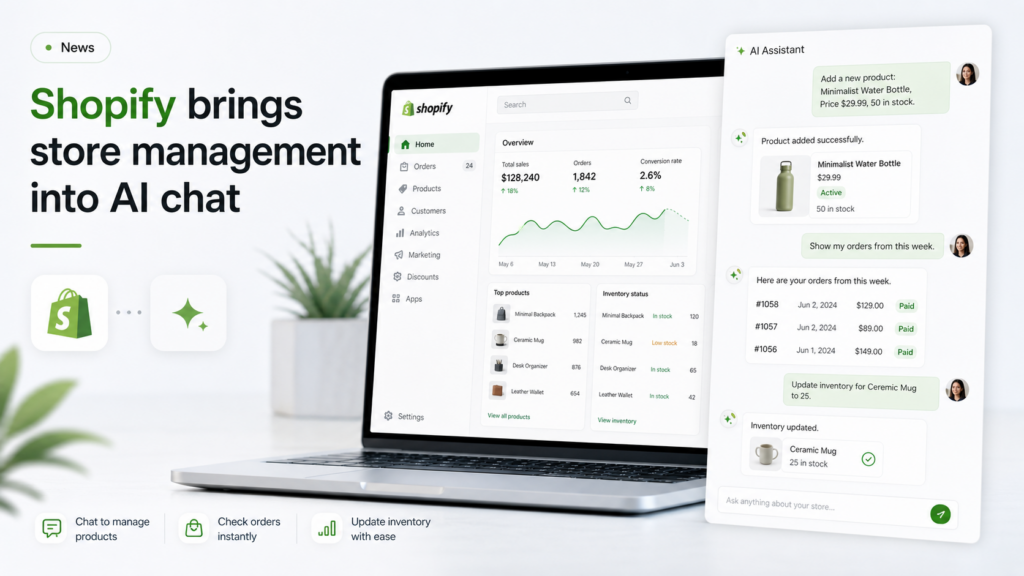
Shopify is making store management more conversational.
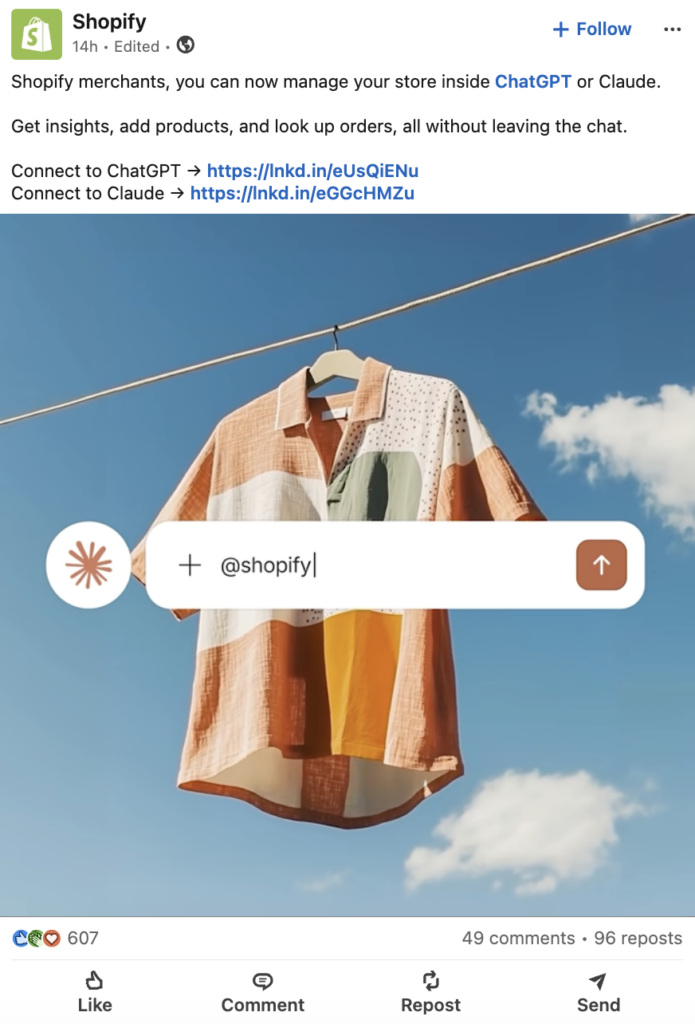
According to an update posted on May 4, 2026, the company now lets merchants connect their Shopify stores to third-party AI tools, including ChatGPT and Claude. Once connected, these tools can access the store data a merchant authorizes and take certain actions on their behalf, such as updating products or changing prices.
In simple terms, Shopify merchants can now manage parts of their store from inside an AI chat instead of only working through the Shopify admin.
This does not mean the Shopify dashboard is going away. But it does show where ecommerce software is moving. Merchants are no longer just asking AI tools to write product descriptions or email copy. They are beginning to use them as an operating layer for store work.
What Shopify announced?
Shopify’s help documentation now lists dedicated apps for ChatGPT and Claude. The Shopify app for ChatGPT lets merchants preview, claim, and manage a Shopify store from within ChatGPT. The Shopify app for Claude offers the same kind of store connection inside Claude.
Shopify also offers a CLI connector for AI tools, which is more relevant for developers and technical teams that want to connect local AI tools to the Shopify API.
The merchant-facing story, though, is much simpler: Shopify is letting store owners work with their store through natural language.
What Shopify merchants can do from chat?
The Claude connector page gives a clearer view of what this can look like in practice. Shopify for Claude can help merchants add products, adjust inventory across locations, create discount codes, browse recent orders, view customer details, and pull store performance analytics.
So a merchant could ask an AI assistant to create a new product, check today’s unfulfilled orders, update stock for a SKU, or run a quick sales and conversion analysis.
That is the real shift here. AI is not just answering generic ecommerce questions. It is connecting to actual store data and helping with live store operations.
How this is different from AI shopping?
This update is different from Shopify’s earlier AI shopping push.
In March 2026, Shopify announced that merchants could sell through AI chat experiences, including ChatGPT, Microsoft Copilot, Google AI Mode, and Gemini. That update focused more on the shopper side, where customers discover products and complete purchases through AI-powered shopping experiences.
This new update is focused on the merchant side.
Instead of asking, “Can customers buy Shopify products through AI?” the question becomes, “Can merchants run parts of their store through AI?”
That is a very different layer of ecommerce.
The bigger picture
Shopify has been moving toward AI-connected commerce for a while. Its AI Toolkit connects AI tools to Shopify’s documentation, API schemas, code validation, and store management capabilities, so agents can work with Shopify more accurately instead of guessing how the platform works.
This also connects with a broader Shopify and OpenAI shift we covered earlier, where Shopify appeared as a search partner inside ChatGPT’s shopping experience. That earlier update was about product discovery. This one is about store operations. Together, they show Shopify becoming more deeply connected to AI interfaces from both sides of ecommerce: how shoppers find products and how merchants manage stores.
For merchants, the direction is clear. AI tools are becoming less like separate writing assistants and more like connected workspaces that can read business data, answer questions, and help complete tasks.
What merchants should keep in mind?
Shopify is also clear that merchants need to review what they are authorizing before connecting AI tools. The AI tool can only access data and perform actions based on the permissions granted during setup, and user permissions still apply.
Shopify also notes that AI outputs can contain errors, so merchants should review information and actions before relying on them. If an AI tool makes an incorrect change, Shopify says the merchant is responsible for that change.
So the takeaway is not that AI should run a Shopify store unsupervised.
The real takeaway is that Shopify is making AI chat a practical interface for ecommerce work. Store management is slowly moving from menus and dashboards toward conversations, connected data, and faster action.
Get the latest marketing news and trends
Delivered straight to your inbox.
Thank you for subscribing!
Stay tuned for the latest updates.
Canva is bringing Magic Layers into ChatGPT and Gemini, letting users turn...
Anthropic has launched Claude Fable 5, its most capable Claude model made...
Meta has quietly released Forum, a new standalone app that gives Facebook...
Meta has launched Instagram Instants, a new disappearing photo-sharing feature that brings...