






When an ad campaign falls short, people look at the live dashboard and blame the budget. They say the platform did not optimize properly, or that the algorithm needed more historical data to find customers.
This reaction is common among e-commerce brands and growth agencies whenever a weekend launch fails to generate profitable sales. In reality, many campaigns are in deep structural trouble long before the budget runs out. The video assets fail to stop users from scrolling, the core offer confuses people, or the landing page breaks the promise made in the ad copy.
More money simply makes a bad ad more expensive. If you want to understand why campaigns underperform, you have to look at what happened before they went live. When a campaign starts with a weak foundation, no amount of targeting refinement will fix it. You can adjust audience settings for weeks without improving cost per acquisition if the person seeing the ad has no reason to care about your product.
Every result you want, whether it is a checkout or a qualified lead, starts with getting someone to stop moving their thumb on a screen. The auction system rewards attention. When people click your ads, the platform lowers your cost per impression because you are providing content that users want to interact with. Yet many paid social ads fail because they do not say anything useful in the first two seconds. Good creative helps the right person understand what you sell without making them work for it. You do not need cinematic camera angles or professional actors. You need clarity.
This is why creator-led ads and UGC ads continue to outperform polished brand content in many cases. People prefer watching real videos made by real people. HypeHunter AI helps brands find creators who fit their audience and campaign goals before the spending starts, reducing the risk of investing in high-production videos that look impressive but fail to convert cold traffic. When you start with clear assets, the metrics become easier to manage because your content matches the visual language of the platform. The viewer stays, and that extra three seconds of attention gives your message time to land.
A creator with millions of views can still tank a paid ad campaign. Most brands look at follower counts or engagement rates when they hire talent, but paid feeds do not work like organic feeds. An ad has a few moments to make a viewer trust a stranger.
Organic audiences follow creators because of long-term consistency or personality quirks. When that same creator appears in a campaign targeting cold audiences, those followers are not the ones seeing the video. The ad network serves the asset to users who have never seen that creator before in their lives. The creator cannot rely on existing loyalty to get the message across. They have to build trust instantly.
The best creators for creator-led ads know how to talk to a buyer without sounding like they are reading a script. If a creator’s style does not fit your product, the campaign will struggle. A lifestyle influencer who usually posts about luxury travel will struggle to sell a business-to-business accounting tool, even if their engagement rate is high.
Brands should ignore profile quality and focus entirely on whether the creator makes the product look believable to a real customer. Look at their past sponsorships to see if they can hold attention when they are actively promoting a commercial offer. A creator who can explain a complex feature in plain language is worth far more to your acquisition strategy than a celebrity who simply holds the product next to their face.
Confusing offers kill conversion rates. A user might watch your video, but they will leave if they have to guess what they are buying or how much it costs. Ads fail when they list technical features instead of explaining the actual outcome.
If a customer has to read your landing page three times to understand what is included in the purchase, they will close the tab. Friction is the most expensive element in a marketing funnel. Marketers often try to hide the price or make the subscription terms vague in an attempt to get more clicks, but this just shifts the drop-off from the ad provider to the checkout page. You end up paying for high click volume that never turns into revenue.
| Weak, Broad Messaging | Specific, Outcome-Focused Offer |
| “Shop our new skincare range.” | “A 3-step routine for acne-prone skin that clears breakouts in 14 days.” |
| “Upgrade your wardrobe today.” | “Wrinkle-free workwear for busy professionals under $70.” |
| “Check out our software solutions.” | “Automate your client invoicing and save 5 hours every week.” |
| “Get fit for the summer.” | “A 20-minute daily home workout plan that requires no equipment.” |
| “Our mattress uses better foam.” | “A cooling gel mattress that stops tossing and turning so you wake up without back pain.” |
People buy things because they understand how the product changes their daily life. If your offer requires an explanation, rewrite the copy until a middle school student can understand the value proposition in five seconds.
A marketing team at a venture-backed mattress brand once launched a Meta campaign with four different creators, three distinct discount offers, two landing pages, and five different text hooks all running inside the same ad set. When the cost per acquisition doubled over the weekend, the team spent three days arguing about whether the creative failed or the audience was wrong. They could not fix the problem because they had changed everything at once.
Teams spend tens of thousands of dollars on multi-variable tests that yield absolutely zero actionable insights. They look at a blended return on ad spend and try to make decisions based on a data pool that has been completely corrupted by overlapping tests. This approach leads to heavy amounts of wasted ad spend.
Rigorous ad creative testing requires isolating your variables. If you want to know if a specific hook works, keep the creator, the offer, the audience, and the landing page completely identical across the variants, changing only the first three seconds of the video. Group your ads by one specific hook or one specific creator so the results make sense. Keep your naming conventions identical across the account and pick your primary success metric before you hit publish. If you do not know what success looks like before the campaign goes live, you will find a way to justify the data after the money is gone.
Marketers often leave losing ads running because they think the algorithm is still learning. Most campaigns tell you exactly what is wrong within forty-eight hours, and poor initial data points rarely improve by keeping the budget running.
You do not need to spend your entire budget to discover how to know if an ad campaign is failing. If one ad eats 80% of your daily spend but generates zero checkouts, the campaign is broken. The platform is feeding budget to that asset because it has a high click rate or high watch time, but those clicks are empty if they do not convert.
Vaizle connects directly to your Meta account and translates your live Meta ads performance data into plain English. Instead of building pivot tables or exporting spreadsheets, you can ask the tool which ads are burning money, which creators are driving actual purchases, and which creatives need to be turned off immediately.
Automating your ad performance analysis prevents human bias from keeping dead campaigns alive out of pride. The data does not care how long it took to edit the video. If you are noticing a low ROAS or a high CPA, you need an objective tool to show you where the leak is occurring.
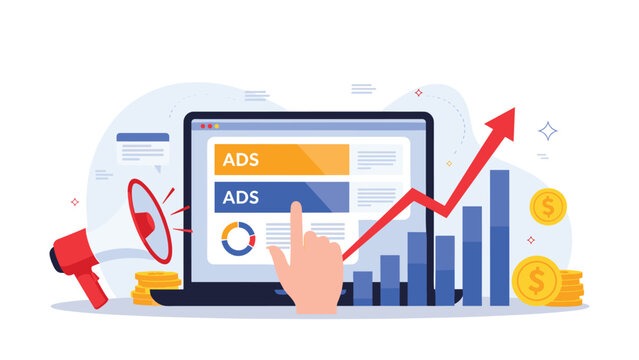
Doubling the daily spend on a broken ad set does not fix the creative; it just loses your money twice as fast. Scaling a broken funnel to hit aggressive monthly targets simply compounds your acquisition issues. If your landing page does not convert or your target market is experiencing ad fatigue, more budget will just increase your losses. Look at where your conversion funnel breaks before you add capital. Vaizle shows you which specific ads are driving actual revenue and which ones are just consuming impressions.
Raising the daily budget forces the platform into more competitive auctions, causing your cost per thousand impressions to rise. If your conversion rate stays the same while impression costs go up, your profit margins shrink. You must have a healthy buffer in your performance metrics before you decide to add capital to an active ad set.
If you want to learn how to reduce wasted ad spend, run through this checklist before you change your daily spend limits:
[Define Objective] ➔ [Select Creators/UGC] ➔ [Build Clear Angles] ➔ [Clean Testing Structure] ➔ [Analyze Early Signals] ➔ [Scale What Works]
A modern paid ad strategy requires a repeatable process that prioritizes clear inputs before spend occurs.
Pick one goal. You might be testing a new hook, or you might be optimizing for cold purchases. If you try to achieve brand awareness and direct-response conversions in the same campaign, you will end up with an asset that achieves neither. Write down your hypothesis before you create the ad set.
Find talent that uses the same language as your customers. HypeHunter AI sources creators who fit your specific brand tone before you upload assets to the ad manager. This saves your internal design team from having to re-edit footage that does not resonate with your target demographic.
Step 3: Build ads around clear angles
Each ad should test a clear idea, such as a product benefit, customer problem, objection, use case, comparison, or offer. Do not let the creative drift into multiple unrelated topics during a single video. If you are selling a software tool that saves time, the entire asset should focus entirely on that time savings angle. Save the cost-savings angle or feature breakdowns for a completely different creative variant so you know exactly which message resonates with the audience.
Do not mix too many variables at once. Keep the test simple enough to understand. When you keep the testing structure clean, the automated optimization tools inside the ad account can distribute impressions effectively without getting stuck in a feedback loop. If you launch multiple hooks, offers, and creators together, you corrupt the data pool and make it impossible to identify your actual top performers.
Once the ads are live, check spend, CPA, ROAS, CTR, conversion rate, frequency, and fatigue. You do not need to wait weeks for a platform to finish learning when the initial data points are poor. Vaizle can help teams analyze these Meta Ads signals in plain English and understand which ads deserve more budget, which need fixing, and which should be stopped. This cuts down the time spent decoding complex spreadsheets and keeps the team focused on real performance realities.
Scale the ads that are producing results. Fix or stop the ads that are only spending money without creating outcomes. Do not leave underperforming assets live out of pride or because you want to give them a fair chance. The market decides what works, and your job is to pull budget from losing assets and move that capital directly into winning creative.
Paid ads do not usually fail in one dramatic moment. They fail slowly through weak creative, unclear offers, poor creator fit, messy testing, and ignored performance signals. When efficiency drops, adding capital only accelerates the loss. More budget can help a strong campaign scale, but it rarely saves a weak one.
The better approach is to improve the creative before launch, choose creators carefully, make the offer clear, test cleanly, read the data early, and move budget toward what is actually working. The goal is not to spend the full budget. The goal is to learn early enough to stop wasting it.
Connect your marketing channels, ask questions, compare performance, and get reports without jumping between dashboards.
Copyright @VAIZLE 2026