Meta Launches Easier Conversions API Setup and AI-Enhanced Pixel
Meta updated Pixel and Conversions API with easier setup and more automatic site data. Here’s what advertisers should check now.
Meta has announced two measurement updates: an AI-enhanced Pixel that can pull in more site details automatically, and a simpler Conversions API setup inside Events Manager. The update is aimed mainly at advertisers that want better tracking without turning setup into a technical project.
Meta has introduced a new Pixel and Conversions API update that is less about flashy new features and more about making day-to-day tracking easier to manage. In its April 15 announcement, the company said it is upgrading Meta Pixel and adding a Meta-managed Conversions API option that can be turned on more easily inside Events Manager.
That matters because plenty of advertisers already know they should have a stronger measurement setup, but many still stop at a basic Pixel implementation. Not because they do not care, but because the next step often feels too technical, too slow, or too dependent on outside help. This update looks like Meta’s attempt to close that gap.
A quick read of the announcement:
- Meta Pixel can now capture more context automatically. Meta says the update helps the Pixel include more page and product details with events. Trade coverage says that can include things like page title, page type, product name, price, currency, and availability.
- Conversions API is getting a much easier setup path. Meta says its new “Meta-enabled” Conversions API can be turned on with one click, with no added cost or ongoing maintenance.
- This is mainly for advertisers with simpler setups. AdExchanger reports that brands already using a custom Conversions API setup or a partner integration do not need to change anything right away.
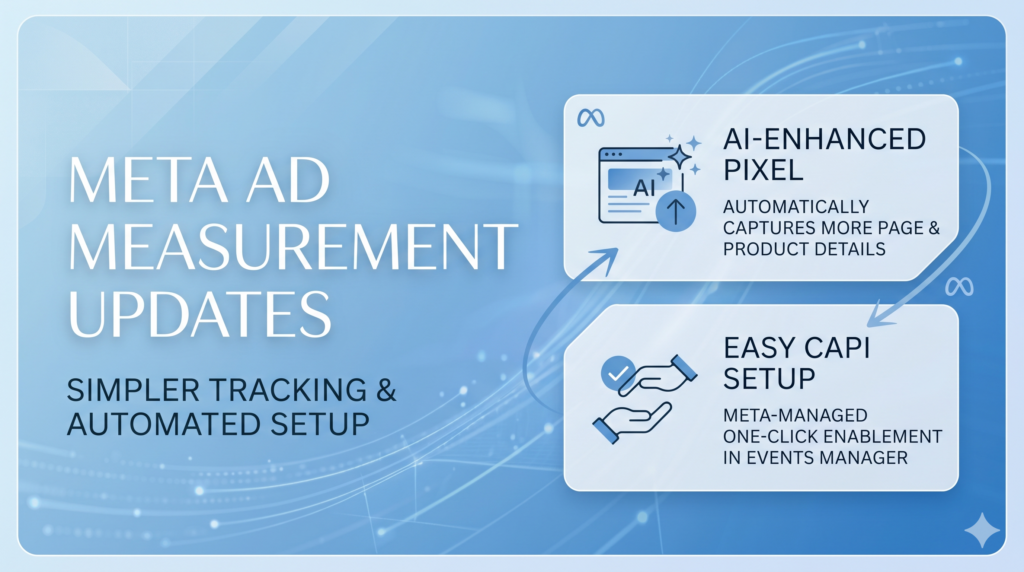
Meta is making better tracking easier to set up
The most useful way to look at this update is not as a reinvention of Meta’s measurement stack. It is a simplification. Meta is taking two things advertisers already know matter, cleaner event data and a stronger Conversions API setup, and making them easier to maintain.
The Pixel side of the update is about reducing manual work. Instead of asking advertisers to keep labeling and maintaining as much page and product information by hand, Meta says the Pixel can now understand more of that automatically. For busy teams, that is important because tracking problems often do not come from one big mistake. They come from small setup gaps that never get fixed.
The bigger practical shift, though, is probably Conversions API. CAPI has been useful for a long time, but for many smaller brands it has lived in that frustrating category of “we should do this properly at some point.” Meta is clearly trying to move it out of that bucket and make it feel reachable now.
This matters most if your setup is still basic
If your business already runs a mature partner integration or a custom Conversions API setup, this update is not a reason to rebuild anything. Meta’s simpler path is more relevant for advertisers that still depend mostly on browser-side tracking and have been putting off a better setup because the work felt heavier than the benefit.
That is why this story is especially relevant for smaller ecommerce brands, lean in-house teams, and advertisers without dedicated technical support. The announcement is not really telling advanced advertisers that they have been doing it wrong. It is telling the rest of the market that the next step should now be easier.
Before you switch anything on, check your current setup
There are two details advertisers should not skip. First, existing Meta Pixel users are not being pushed straight into the new enrichment feature without notice. According to AdExchanger and MediaPost, Meta is giving advertisers a 30-day review window before the feature is enabled by default, and businesses can manage or turn off the data categories involved through Events Manager.
Second, the rollout is not the same for everyone. Coverage says some advertisers with stricter data-sharing limits, including certain special ad categories such as finance, employment, health, and housing, are excluded from parts of the update. Meta also says its existing privacy, consent, and Business Tools rules still apply.
That leaves advertisers with a fairly simple decision. If your setup is still mostly Pixel-only, this is worth reviewing in Events Manager because Meta is offering a cleaner path to better tracking. If your measurement stack is already in good shape, this is useful to know about, but probably not urgent.
This update will not fix weak creatives, poor offers, or landing page issues. But it could remove one of the most common reasons advertisers stay stuck with lighter tracking than they want: the setup work never quite feels easy enough to prioritize. That is what makes this a meaningful update, especially for teams that want better measurement without taking on another technical project.
RELATED: If you’re new to Meta Ads and still learning concepts, check out our very detailed guide here.
Get the latest marketing news and trends
Delivered straight to your inbox.
Thank you for subscribing!
Stay tuned for the latest updates.
Google is testing a new program that could change how publishers are...
Shopify has added Meta as an AI commerce channel in Agentic Storefronts,...
Meta is giving AI a more direct role in deciding which actions...
Meta is expanding Meta AI with a new set of features designed...