





Meta has shipped more platform changes in the past six months than in the two years prior. A new ad distribution algorithm. A smarter recommendation engine. A placement that got quietly removed and auto-migrated without most buyers noticing. Hard deprecation deadlines on API versions that will break reporting stacks if nobody checks. A creative quality model that is now actively penalizing low-engagement ads with higher CPMs.
Some of these Facebook ads updates will improve your results if you respond to them correctly. Some will cost you money if you do not. All of them are live right now.
In this blog, I have listed all latest Meta ads updates you should know of in 2026! Let’s dive right in!
Meta’s new ad distribution system, Andromeda, has finally rolled out for all and is now fully operational. The functional change is significant: your creative is being actively parsed by the system to determine audience fit, not just used as the thing people see once they have been matched to your ad.
When you upload an ad, Meta’s system reads the visual content, the copy, the tone, the context of the product being shown, and the implied customer being spoken to. An ad showing a middle-aged woman with copy about knee pain gets read as “this is for older adults with joint issues.” An ad with a 22-year-old in a gym with pre-workout copy gets read differently. The creative itself is generating the audience signal. Your interest category selections are becoming closer to suggestions than parameters.
This explains something a lot of media buyers noticed in 2025 without a clear reason: broad targeting campaigns and Advantage+ Audience campaigns started consistently outperforming tightly constructed interest-layered ad sets, even in categories where the audience had historically needed precision. The algorithm was already doing this. Andromeda formalizes and accelerates it. (Read more about Andromeda update in our detailed blog!)
The competitive skill that used to be “I know how to build the right audience” is now “I know how to build creative that unambiguously speaks to the right person.” Those are different skills. Creative that is generic, tries to appeal to everyone, or hedges its messaging is no longer just a conversion rate problem. It is a targeting problem, because a vague ad gives the algorithm a vague signal and gets distributed vaguely.
Build at least 8 to 12 creative variants per campaign. Make each one specific. The system needs variety to test which signals it should amplify, and it needs clarity in each asset to know who to find.
Andromeda reads your creative. GEM, the Generative Ads Recommendation Model, is the system that decides which ad goes to which person at which moment across the entire inventory.
In Q4 2025, Meta doubled the GPU capacity training GEM and adopted sequence-learning architecture. The earlier system evaluated users largely as static profiles. The new architecture understands behavioral patterns over time, which means GEM can identify someone who is three days from a purchase decision versus someone who is browsing without intent, and allocate ad impressions accordingly.
The reported outcomes: a 3.5% increase in ad clicks on Facebook and a 1%+ lift in conversions on Instagram from GEM improvements in Q4 2025. A new real-time serving model across Instagram Feed, Stories, and Reels drove an additional 3% increase in conversion rates. On a $200K monthly budget, a 3% conversion lift is roughly $6,000 in additional return from the same spend. It compounds.
GEM gets significantly less useful if it is operating without enough signal. The first is a Pixel that is misfiring or only partially tracking events. The second is budgets capped so aggressively that campaigns cannot exit the learning phase and accumulate the roughly 50 conversion events per week the system needs to optimize properly. The third is running CAPI without the Pixel, or the Pixel without CAPI. Meta’s own guidance is that both together produce materially better optimization than either alone, because they triangulate the same event from two data sources.
Check your Events Manager this week. Look at the match quality score on your CAPI setup. If it is below 6 out of 10, your data foundation is costing you delivery quality that no amount of creative testing will recover.
Threads passed 400 million monthly active users and Meta opened the platform to all advertisers globally in early 2026. Ads run through Ads Manager using the same formats and workflows you already know.
The reason to move quickly is inventory pricing. When a new placement opens, the supply of ad slots is large relative to the number of advertisers buying them. CPMs are low. As more advertisers discover the placement and shift budget toward it, demand rises and prices follow. The window where Threads inventory is cheap will not stay open indefinitely.
Threads users are not passive scrollers. The platform skews toward people who are actively engaged in conversations and have strong opinions about what they read. Ads that look like ads, use formal brand language, or interrupt the native content experience perform poorly. The creative that works here looks like content someone would actually post: specific, direct, written for a person rather than a demographic, with a clear reason to exist beyond selling something.
Allocate 5 to 10% of your budget to Threads through Advantage+ placements and treat it as a data-gathering exercise for the next 60 days. You are learning how your audience responds to the placement before the pricing gets competitive.
As of January 2026, the main Instagram Explore feed placement no longer exists. Meta restructured Explore so that tapping a post opens a Reels viewer. The Explore feed ad slot was removed with it. The Explore home placement is still available, but the primary Explore feed inventory is gone.
Meta auto-migrated delivery from affected ad sets to other placements without sending the kind of notification that most advertisers would have caught. For accounts that had campaigns specifically targeting Explore, budget has been flowing somewhere unintended since January, and your placement-level reporting will show a drop in Explore delivery alongside a rise somewhere else that may not make immediate sense.
Pull a placement breakdown on any campaigns running manual placements and cross-reference January delivery against December. If Explore was part of your mix, confirm where that delivery went and whether it makes sense for your campaign goal. Any creative built specifically for the Explore feed format needs to be reformatted for Reels before you run it elsewhere.
Run the prompt inside Vaizle: “Compare placement-wise data for December and January. Check for any sudden placement ad spend shifts that have impacted our overall ROAS.”
This is the most immediately actionable update in Ads Manager and probably the most underused.
Meta added a Conversion Count breakdown that splits your conversions into “First Conversion” (a buyer’s first purchase within the attribution window) and “All Other Conversions” (repeat purchases from existing customers). It is available at campaign, ad set, and individual ad level.
ROAS is a blended metric. A campaign reporting a 4x return can look very different once you see that 65% of those conversions came from people who already bought last month. That is not new customer acquisition. That is retention activity being counted inside your prospecting budget. You were paying acquisition CPMs to re-convert your own customer base and calling it performance.
Before this breakdown existed, diagnosing this required custom audience exclusions, pixel-based workarounds, or a third-party attribution tool. Now it is in the dashboard.
Open your top acquisition campaigns, apply the Conversion Count breakdown, and look at what percentage of conversions are “First Conversion.” If it is below 50%, add a customer list exclusion to the ad set and rerun it. A healthy prospecting campaign should sit at 70% or above in the “First Conversion” bucket. That is a rough benchmark, not a rule, but it is a useful starting point for the audit.
A year ago, the honest answer about Meta’s AI creative tools was that they were early and mostly produced output you would not run. That has changed.
The image-to-video tool inside Advantage+ Creative now converts up to 20 product images into multi-scene video ads. For e-commerce brands with large catalogs and limited video production resources, this is a real operational change. The output quality will not win awards, but it is good enough to test against manually produced video in certain placements, particularly Reels and Stories where native-feeling content outperforms polished production anyway.
Meta also added automated brand controls that lock logos, fonts, and color palettes so AI-generated variations stay within brand guidelines. Text variation generation has improved meaningfully. Earlier versions would alter the meaning of the original copy. The current version preserves the core message while adjusting tone, length, and emphasis.
Meta committed $14 to $15 billion in AI infrastructure investment and announced 11 new AI advertising tools at Cannes Lions 2025. Their stated roadmap is a system where an advertiser inputs a product URL and a budget, and Meta generates and optimizes the entire campaign: creative, copy, targeting, bidding. That is not a 2026 reality, but the tools releasing now are the early iterations of that system.
Test the image-to-video tool on your lowest-performing video assets in catalog campaigns and compare CTR. One important caveat before you do: review all AI-generated copy before publishing, especially in health, finance, or any regulated category. AI copy generation does not understand compliance requirements and will produce technically accurate but legally problematic language without human review catching it first.
Click-to-WhatsApp ad revenue grew more than 50% year-over-year in the US in Q4 2025. Meta introduced a dedicated “Chat on WhatsApp” objective for lead generation campaigns. This is no longer a feature buried in the interface that mostly served international advertisers. It is being positioned as a primary conversion pathway.
The mechanics are different from a link-click campaign. The click opens a WhatsApp conversation directly with your business rather than sending someone to a landing page. For any offer with meaningful complexity, multiple variables, or a high ticket price, this changes the conversion dynamic. A person who clicks into a WhatsApp conversation has more intent than someone who lands on a form page. They are choosing to initiate contact, not just navigating a funnel.
This only works if you have people or automation on the other end of the conversation. If the message goes unread for six hours, you have converted a warm lead into a frustrated one. That constraint is the whole game with this format.
For advertisers in markets where WhatsApp penetration is high, India, Brazil, Mexico, Southeast Asia, the Middle East, this should already be in your active test set. For US-focused advertisers, the 50% YoY growth number is a signal to run a structured test in Q1. Measure cost per qualified conversation, not cost per click. The volume will be lower. The quality often makes the cost per outcome competitive with or better than traditional lead gen.
Meta Lattice is a unified quality model that replaced the surface-by-surface approach to ad evaluation. Previously, Meta assessed ad relevance and quality separately for each placement. Lattice runs a single consolidated model across surfaces, which lets it compare ads against each other more consistently and score quality with more precision.
Meta reported a 12% improvement in overall ad quality following Lattice’s deployment.
To understand what that 12% means for your account, you need to know what the model measures. Lattice evaluates three things: estimated action rate (how likely someone in your audience is to take the intended action after seeing the ad), quality ranking (how your ad compares to other ads competing for the same audience), and engagement rate ranking (how your expected engagement rate compares to similar ads). These are the same signals that existed in the old Relevance Score framework, but Lattice applies them with more consistency and more weight across placements.
The CPM implication flows directly from this. Ads with strong quality scores get distributed at lower cost because Meta makes more money showing ads that users engage with. Ads with weak scores get penalized with higher CPMs and constrained delivery. A creative your team thinks is good but that users scroll past will cost progressively more to run as Lattice confirms the low engagement rate.
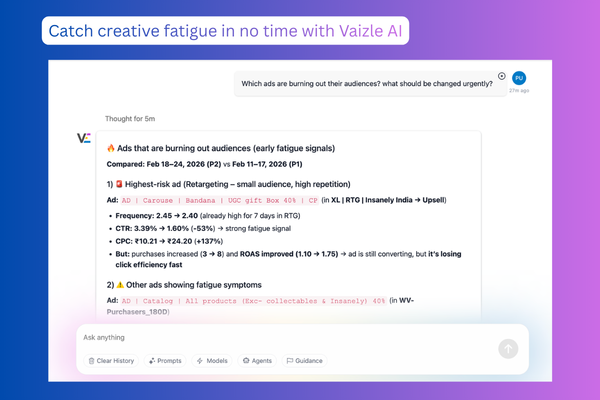
Meta is rolling out a Creative Fatigue score in Ads Manager that flags when a specific ad is burning out with its audience. Creative fatigue shows up in CPMs and ROAS before most buyers catch it, and by then you have usually wasted 5 to 7 days of spend on a dying asset. This score gives you the earlier signal.
Build weekly creative reviews into your account management process. Watch frequency, CTR trend over the first two weeks, and the fatigue score when it is available on your account. Rotate before performance drops, not after.
This section matters most for agency teams and advertisers running third-party reporting tools, but the deprecation timelines are firm enough that everyone managing at scale should know them.
Meta launched Graph API v25 and Marketing API v25 in late 2025. Here is what is changing and when:
Aggregated Event Measurement 2.0 is the current privacy measurement standard for iOS-restricted traffic. The meaningful change from the original version is how conversion events are deduplicated and prioritized. If you configured your pixel event priority ranking when AEM first launched in 2021 and have not reviewed it since, your current setup is likely not optimized under the 2.0 framework.
Go into Events Manager, verify your domain, and confirm that your top 8 pixel events are ranked in order of actual business priority, with purchase or your most downstream conversion event at position one.
Audit your reporting stack against all four of these items this week. If you use Supermetrics, Vaizle, any custom Google Sheets connector, or a BI tool pulling from Meta’s API, check which API version the connector is running on. Anything on v19 or v20 needs to be flagged for urgent updates. These have dates.
The coherent picture across all of these updates is Meta building a platform that runs better the less you try to force it. Better creative signal, cleaner data, appropriate budgets for the learning phase, then step back. The accounts compounding the fastest in 2026 are not doing more complex audience work. They are doing less of it and investing the recovered time and budget into creative production and data infrastructure.
The skills that built successful Facebook advertisers for the past decade, audience architecture, interest layering, exclusion lists, demographic carving, are being systematically made less relevant by the platform itself. The skills replacing them are creative judgment, conversion data quality, and the ability to read performance signals early before spend is wasted.
The accounts that adapt will find this year’s changes working in their favor. The ones running the old playbook will spend more for the same results without knowing why.
Every Facebook ads update in this blog demands the same thing: faster, more specific reads on what is happening inside your account. Creative fatigue before it eats your ROAS. First-conversion ratios before your prospecting budget gets cannibalized. CAPI match quality before GEM starts optimizing blind. Placement delivery shifts before the budget migrates somewhere it should not be.
Vaizle AI is built specifically for this. It connects to your Meta account via API, fetches your campaign data, and works like an analyst you can actually question. Ask it which creatives are fatiguing, which campaigns are converting existing customers instead of new ones, where your CPMs are trending, or what changed in your account performance week over week. It runs the analysis and gives you a direct answer.
The platform is moving fast. Your ability to read what is happening in your accounts needs to keep up. See what Vaizle AI can do.
Andromeda is Meta’s ad distribution system that reads your creative content to generate audience signals, rather than relying primarily on the interest and behavior targeting you select. The imagery, copy, product context, and implied customer in your ad are all parsed by the system to determine who should see it. It has been operational since late 2024.
Yes. Detailed targeting inputs are now treated as soft signals. The algorithm can and does show your ads outside your selected audience when it predicts higher conversion likelihood elsewhere. Advantage+ Audiences, which hands targeting control to Meta’s AI, is now the recommended and generally better-performing approach for most campaign types.
Yes. Meta opened Threads advertising to all advertisers globally in early 2026. Campaign management runs through Ads Manager and supports image and video formats.
GEM stands for Generative Ads Recommendation Model. It is the system that decides which ads to serve to which users and when across Meta’s inventory. Meta expanded GEM’s compute significantly in Q4 2025 and updated its architecture to understand behavioral patterns over time rather than static user profiles.
The Instagram Explore feed ad placement was removed in January 2026. Meta restructured Explore so that tapping a post now opens a Reels viewer. The Explore home placement remains, but the main Explore feed ad inventory is gone. Affected ad sets were auto-migrated to other placements by Meta.
Aggregated Event Measurement 2.0 is Meta’s current standard for measuring conversions in privacy-restricted environments, primarily iOS. It changed how events are deduplicated and ranked. If your pixel event priority was configured under the original AEM framework and has not been reviewed recently, verify your domain and confirm your top 8 events are ranked correctly in Events Manager, with your most important conversion event at position one.

Siddharth built two bootstrapped companies from the ground up: Vaizle and XOR Labs. He’s personally managed over Rs 100cr in ad budget across eCommerce, D2C, ed-tech, and health-tech segments. Apart from being a full-time marketer, he loves taking on the challenges of finance and operations. When not staring at his laptop, you’ll find him reading books or playing football on weekends.
Copyright @VAIZLE 2026
